Cart
0
You may also like

Last Updated: September 18, 2026
Glutathione supplements are oral or topical products built around glutathione, a compound your body already produces and one of the most studied antioxidants in skin health. This guide from Organic Skin Lightener breaks down how to judge them: form, absorption, third-party testing, and realistic timelines.

Most shoppers pick a bottle by reading the front label.
| What to Check | Why It Matters | Red Flag |
|---|---|---|
| Form (liposomal vs. standard) | Determines absorption rate | Vague "glutathione" with no form listed |
| Dose per capsule | Too little does nothing | Proprietary blends hiding amounts |
| Third-party testing | Confirms purity standards | No COA available on request |
| Additives (NAC, ALA, silymarin) | Supports antioxidant recycling | Fillers and synthetic dyes |
| Sourcing transparency | Synthetic vs. natural origin | No manufacturer disclosure |
Glutathione is a tripeptide, three amino acids (glutamate, cysteine, and glycine) bonded in a specific sequence, that your liver produces and that nearly every cell in your body uses. It neutralizes free radicals, recycles other antioxidants, and participates in phase II detoxification pathways. In skin, it also interrupts the process that produces excess pigment. That is the short version.
Glutathione earns the nickname "master antioxidant" because it recycles other antioxidants, including vitamins C and E, rather than working alone. It also regenerates itself through a cycle involving NADPH and the enzyme glutathione reductase, which is why sustained intake matters more than a single large dose.
Three mechanisms drive its skin effects:
What most guides miss is that glutathione works systemically. Oral glutathione must survive stomach acid, cross the intestinal wall, enter the bloodstream, and reach skin cells intact. That journey is where most products fail.
Two bottlenecks matter:
Glutathione does not work in isolation. Three cofactors are commonly paired with it because they support the same recycling cycle:
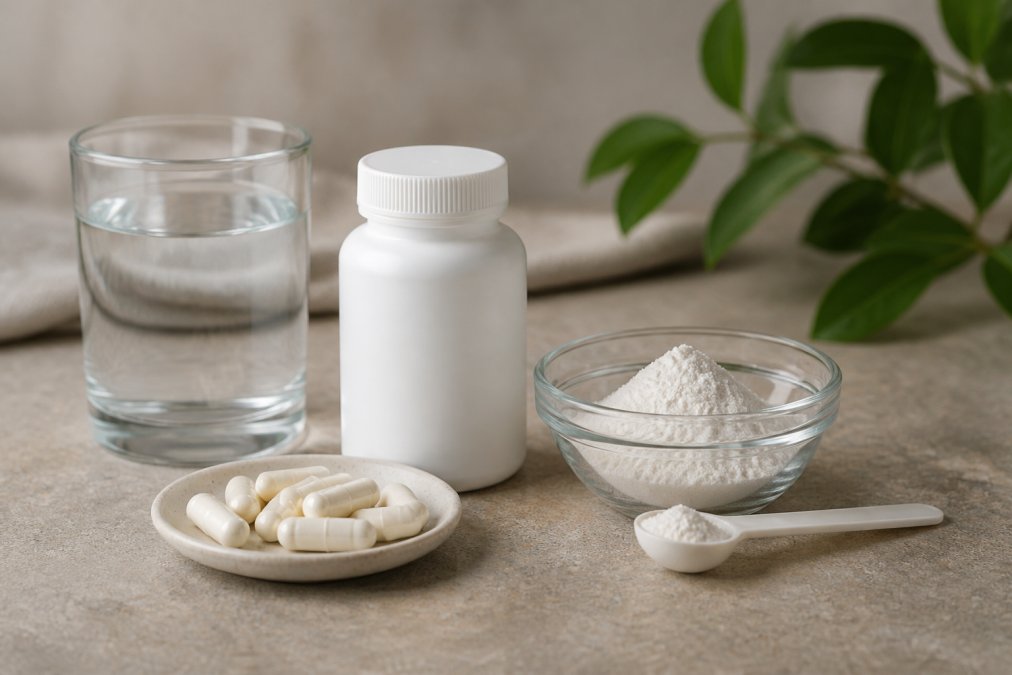
Liposomal glutathione absorbs better than standard reduced glutathione because the liposomal delivery system wraps the nutrient in a protective lipid layer. That layer shields it from breakdown in the stomach, so more reaches circulation intact.
Most people see early changes in skin radiance within two to four weeks, with more even tone developing over eight to twelve weeks of consistent use. Deep or long-standing hyperpigmentation takes longer because you are waiting on skin cell turnover, not just the supplement.
Here is a realistic timeline:
| Timeframe | What Most People Notice |
|---|---|
| Weeks 1-2 | Subtle glow, improved hydration |
| Weeks 3-4 | Early fading of surface dark spots |
| Weeks 8-12 | More even overall tone |
| Months 3-6 | Visible change in stubborn patches |
This is the biggest gap in glutathione content, and it deserves a straight answer. The honest position is that long-term efficacy data on skin-lightening results after discontinuation is limited. What practitioners generally observe, and what the mechanism predicts, is that results are maintenance-dependent, not permanent.
Here is why, mechanistically:
If your goal is a sustained change in skin tone rather than a temporary one, plan for one of two approaches:
Most published glutathione research uses small sample sizes, short durations (often eight to twelve weeks), and varies widely in dose and form. That means the timeline above reflects the general pattern across studies and user reports, not a guaranteed individual outcome. If you have a diagnosed pigmentary condition such as melasma, the timeline is typically longer and the response more variable, which is one reason a dermatologist's input is worth seeking before you commit to a six-month protocol.
Oral glutathione is generally well tolerated at typical doses, with the most common complaints being mild digestive upset, bloating, or headache. These usually fade as your body adjusts.
Some people should not take it without medical guidance:
Drug-nutrient interactions are the most under-covered angle in glutathione content, and they matter. Glutathione can affect how the body processes certain medications, particularly chemotherapy agents and drugs metabolized through liver pathways.
Sourcing standards separate serious brands from the rest:
Clinical research shows oral glutathione can reduce melanin production by supporting the body's master antioxidant system. A 2019 review in the Journal of Clinical and Aesthetic Dermatology found participants experienced measurable skin lightening after 8 to 12 weeks of daily use. Results depend on the form, dosage, and bioavailability of the glutathione supplements you choose, plus consistent daily intake.
Most people tolerate oral glutathione well. Reported side effects of oral glutathione include mild digestive discomfort, bloating, and occasional headaches, usually when starting a new dose. These typically fade within a week. If you take medication for diabetes, asthma, or blood thinners, speak with your doctor first because glutathione may interact with those drugs.
The glutathione skin brightening results timeline varies by person, but most studies report visible changes between 8 and 12 weeks of daily use. Some users notice a subtle glow within 4 weeks. Deeper hyperpigmentation and melasma often require 12 to 16 weeks. Consistency matters more than dosage spikes, so take your supplement at the same time each day.
Daily use is generally considered safe for healthy adults at doses between 250 mg and 1,000 mg. The body naturally produces glutathione, so it clears excess amounts efficiently. However, long-term high-dose use has not been studied extensively. Choose products with third-party testing and purity standards, and check with your doctor before starting any new daily regimen.
Choosing the right glutathione supplement comes down to reading past the front label: form, delivery system, testing, and honest dosing. Organic Skin Lightener builds its plant-based capsules around an advanced glutathione formula with a zero-bleach approach, formulated by a celebrity dermatologist and backed by clinical testing. If you want a brightening routine without harsh chemicals, start with a brand that shows its work. Add to Cart and give your skin a full twelve weeks to respond.